
The Iron Gold Thesis: Why Red Rising Is a Right-Wing Masterpiece
A tragedy about elites in the oldest sense: what the best men owe, what happens when they stop paying it, and what happens when a civilization decides it doesn't need them at all.
Listen to this essay · 31 min
Narrated by a designed AI voice (ElevenLabs v4), not the author's own
IThe aristocratic epic nobody meant to write
This essay spoils all six books, through Light Bringer. If you want to go in clean, read them first and come back. If you want to know why you should read them at all, keep going.
Blur the five late-series death scenes until you tap them.
I. The aristocratic epic nobody meant to write
The Red Rising movie was just announced, and I'll make a prediction: within a year of its release it becomes the most important right-wing cultural artifact in decades, and almost nobody who made it will understand why.
The greatest pieces of culturally right-wing entertainment are almost never written by people who think of themselves as right-wing (for reasons I still don't understand, intentionally right wing art is almost always bad). Instead, tales become right wing when written by storytellers who set out to tell a progressive story and then committed to the far more dangerous project of making their world feel real. When a storyteller does that, reality eventually stages a coup against their ideology.
Right wing cultural values are simply true, in a deep, almost mythical sense. As a result, anytime an author crosses over into the true realm of the myth, the story invariably becomes right wing. Myth reflects reality; it is a language which can only speak the truth. This is also why left-wing mythology is impossible, no matter how desperately they try.
You can set out to write a parable about the evils of hierarchy and the triumph of the oppressed masses, but the moment you populate that world with actual human nature, scarcity, existential warfare, and the brutal physics of competence, you end up writing something else.
To be clear, I have no clue what the author's political leanings are. I do know Pierce Brown steeped his imagination in Homer, Caesar, Marcus Aurelius, and Hobbes rather than contemporary grievance studies, and he had the artistic integrity to follow his world where it led. What he produced is a tragedy about elites in the oldest sense: a story about what the best men owe, what happens when they stop paying it, and what happens when a civilization decides it doesn't need them at all.
On the surface, casual commentary almost universally misreads the series as a standard progressive liberation fable: a low-caste teenager infiltrates an oppressive, color-coded ruling empire to break the chains of slavery and install a democracy. If you stop reading the back of the dust jacket there, it sounds like The Hunger Games on steroids.
Beneath that premise lies the most unapologetically aristocratic, culturally conservative work of science fiction in the modern canon. Brown built a universe that systematically validates classical elite theory, the Great Man view of history, hard biological and cultural hierarchy, and Edmund Burke's darkest warnings about the suicidal folly of egalitarian revolution. And then, in the back half of the saga, he does something even more interesting: he shows the difference between the right way and the wrong way to stand above other men.
II. The Conquering, and what the frontier does to a ruling class
For the uninitiated, a brief orientation. Set roughly a millennium in our future, humanity has colonized the entire solar system, from the scorching valleys of Mercury to the frozen moons of Jupiter and Saturn. This interplanetary civilization, known simply as the Society, is organized into a rigid, fourteen-tier pyramid of Colors. Unlike historical caste systems built on superstition or geography, the Color hierarchy was engineered at the level of the genome.
At the bottom are the Reds, small, wiry laborers bred to endure radiation and backbreaking toil in the mines. Above them sit specialized castes for every civilizational function: Pinks bred for pleasure and high-stakes diplomacy, Grays engineered as disciplined professional infantry, Blues wired to interface neurally with starships, Greens built for computation, Violets for wild artistic creation, Silvers for finance, Whites for ritual and judicial arbitration, and Coppers for the soul-crushing bureaucratic administration of the empire (essentially the federal lanyard class made into a distinct biological subspecies, which feels almost too on the nose). The Obsidians, pale giants bred purely to wage apocalyptic ground war, are the most physically terrifying beings in the system, and the Society keeps them at the bottom of the pyramid anyway: denied technology, kept in deliberate primitivism, and religiously conditioned to believe the Golds are gods. The most dangerous weapon in the system is the one the ruling class controls most carefully.
And at the summit sit the Golds. Standing seven feet tall, with bone density far beyond baseline humans, razor-sharp cognitive speed, golden eyes, and reflexes that can catch a blade in mid-air, the Golds are genetic demigods. They are the philosopher-warriors, the sovereigns, and the apex predators of the solar system.
The fourteen Colors
The Society's fourteen Colors as a pyramid, top to bottom: Gold, Silver, White and Copper are the highColors; Blue, Yellow, Green, Violet, Orange and Gray the midColors; Brown, Obsidian, Pink and Red the lowColors. Each tier opens to its role, the essay's sentence about it, and the characters of that Color the essay names. It opens on Obsidian, the deadliest Color, kept near the bottom.
Gold · highColors
Rulers of the Society
“Standing seven feet tall, with bone density far beyond baseline humans, razor-sharp cognitive speed, golden eyes, and reflexes that can catch a blade in mid-air, the Golds are genetic demigods. They are the philosopher-warriors, the sovereigns, and the apex predators of the solar system.”
In the essayRomulus au Raa, section IIINero au Augustus, section IVMustang, section VCassius au Bellona, section VLysander au Lune, section VII
Silver · highColors
Financiers and businessmen
“Silvers for finance”
In the essayQuicksilver, section V
White · highColors
Clergy and judges
“Whites for ritual and judicial arbitration”
Copper · highColors
Administrators, lawyers and bureaucrats
“Coppers for the soul-crushing bureaucratic administration of the empire (essentially the federal lanyard class made into a distinct biological subspecies, which feels almost too on the nose)”
In the essayPublius cu Caraval, section VI
Blue · midColors
Starship pilots and bridge crew
“Blues wired to interface neurally with starships”
In the essayOrion xe Aquarii, section V
Yellow · midColors
Doctors and researchers
The essay passes over them.
Green · midColors
Programmers and technicians
“Greens built for computation”
Violet · midColors
Artisans and other creatives
“Violets for wild artistic creation”
In the essayMickey, section IV
Orange · midColors
Mechanics and engineers
The essay passes over them.
Gray · midColors
Regular soldiers and police
“Grays engineered as disciplined professional infantry”
In the essayHoliday ti Nakamura, section V
Brown · lowColors
Servants, cooks, janitors
The essay passes over them.
Obsidian · lowColors
Elite soldiers and bodyguards
“The Obsidians, pale giants bred purely to wage apocalyptic ground war, are the most physically terrifying beings in the system, and the Society keeps them at the bottom of the pyramid anyway: denied technology, kept in deliberate primitivism, and religiously conditioned to believe the Golds are gods. The most dangerous weapon in the system is the one the ruling class controls most carefully.”
In the essaythe ten Obsidian senators, section VISefi, section VII
Pink · lowColors
Pleasure slaves and social functionaries
“Pinks bred for pleasure and high-stakes diplomacy”
In the essayMatteo, section IV
Red · lowColors
Manual laborers and miners
“At the bottom are the Reds, small, wiry laborers bred to endure radiation and backbreaking toil in the mines.”
In the essayDarrow, section IVEo, section IVDancer, section VI
The Society begins with an act of supreme entrepreneurial and martial audacity called the Conquering. Seven hundred years before the story opens, Earth was ruled by decadent, stagnant democracies that had grown fat, tyrannical, and paralyzingly bureaucratic. The pioneers who had colonized the Moon, led by visionaries like Silenius au Lune and Akari au Raa, looked down at a dying cradle of humanity and decided to seize the future by the throat. They engineered the Color hierarchy because dragging humanity across the vacuum of space required superhuman specialization and an apex ruling caste capable of holding a multi-planetary civilization together through sheer force of will. Then they launched the Iron Rain (millions of warriors fired down from orbit inside metal shells that slam into planetary surfaces like artillery), conquered Earth, and ushered in seven centuries of expansion across the stars.
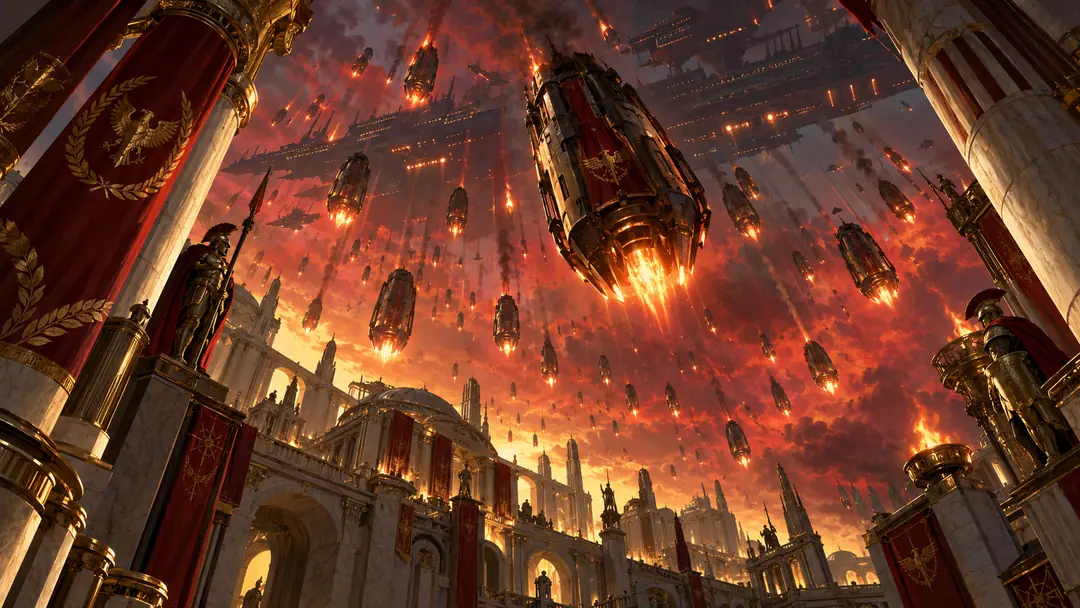
If you are reading this, there's a decent chance you have lived some version of this story at small scale: a handful of people look at a bloated, over-governed incumbent, build the competitor in the harshest environment available, and come back to eat the market.
Then the civilization these Iron Golds forged through sheer courage and will stagnated.
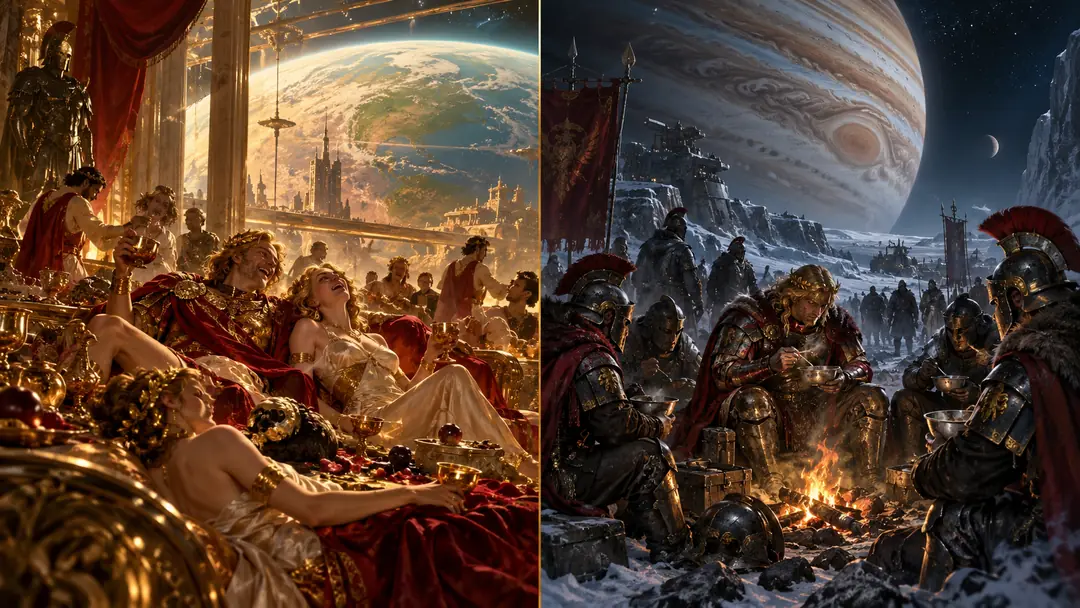
A ruling class is forged by friction. The founders of the Society were hard because the void was hard; every habit they had, from their martial discipline to their contempt for excess to their obsession with excellence, was selected for by an environment that killed the soft. Once the frontier closed, once the last planet was terraformed and the last enemy subdued, the selection pressure vanished. Without an external enemy, internal competition, or real upward mobility, the ruling families of the inner planets (the Core) degenerated from Iron Gold shepherds into drug-addled Pixies (Golds who live only for gluttony, orgies, and narcissism) and sadistic oligarchs. They built an Edenic paradise for themselves in orbital palaces and turned the mines below into a living hell for the lower castes.
In a word, the Core died of decadence.
Much like modern Western civilization.
The West has been living inside a closed frontier for a long time now, and our elite looks exactly like a Gold elite that has run out of things to conquer: a Pixie class that inherited the fruits of hard men and has never once been tested by anything harder than a brunch reservation. A civilization that stops building is a civilization that is already dying. Hardship is not the enemy of a great people. It is what made them great, and when it goes, the greatness goes with it.
Greatness is forged in the act of overcoming, of becoming.
III. The Rim: honor preserved, and the limits of feudalism
How do we know the underlying software of the Golds was noble rather than inherently evil? Because Brown shows us the uncorrupted version of that software on the Rim, the frozen moons of Jupiter and Saturn at the ragged edge of the solar system.
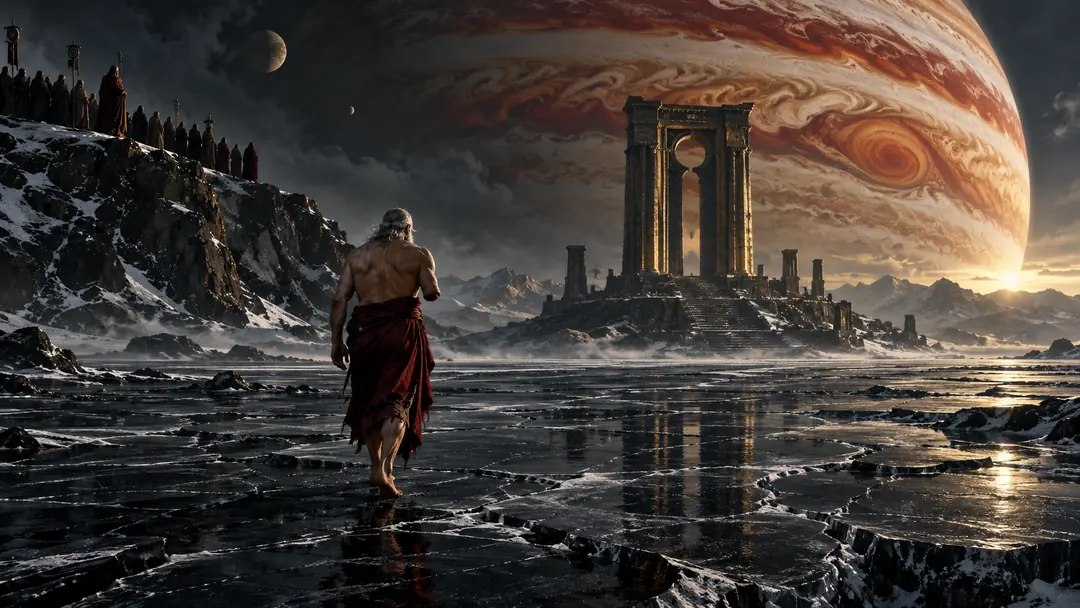
The Rim is harsh, resource-scarce, and unforgiving, and the Rim Golds never had the luxury of becoming Pixies. They eat simple rations alongside their soldiers, despise excess, and live by an unyielding code of noblesse oblige and familial honor. Romulus au Raa, the patriarch of the Rim, is rumored to sleep with a stone from the original Roman Forum as his pillow. When, in Iron Gold, he is put on trial by his own wife and peers for concealing a secret that would have plunged the Rim into a catastrophic war, he does not use his immense personal power to launch a counter-coup, lie, or wiggle out of accountability like a modern politician. He admits what he did, argues that the war would destroy them, and accepts his sentence. He says his goodbyes to his wife and each of his children, strips naked, and walks toward the ancestral monument of the Dragon Tomb across the frozen volcanic surface of Io. He makes it seventy-one steps before he falls, and because he lost his right arm in battle years before and never replaced it, he cannot get back up. He dies ten steps from the stone, in silence, so that the law he lived under remains intact. "Honor is not what you say," he tells them. "Honor is what you do."
The Rim proves that consciously curated aristocratic values are what keep civilization alive against the void; the Core simply let luxury rot their code. But the Rim is also Brown's critique of feudalism. Feudalism keeps the code alive at the cost of every failure mode it has ever had: the blood feud that outlives its cause, the palace coup by the patriarch's own wife, the duel spent as a political instrument (Dido au Raa feeds her own family members into the ring one by one to whip her people into a war).
IV. The anti-woke crucible: becoming excellent to beat the best
Modern progressive storytelling relies almost exclusively on the trope of the effortless underdog. You know the drill: a 110-pound racially ambiguous female protagonist happens to be the smartest engineer, the deadliest martial artist, and the greatest military tactician in the galaxy right out of the box, needing zero training and zero sacrifice because her moral victimhood automatically grants her omnipotence over the bumbling white guys running the empire.
Red Rising takes a chainsaw to this fantasy in its opening chapters. Our protagonist, Darrow, begins the story as a sixteen-year-old Helldiver, the most elite operator of a giant mechanical drill mining helium-3 in the subterranean inferno of Mars. He and his fellow Reds are told by the Society that they are brave pioneers preparing Mars to one day become habitable for humanity. When Darrow's young wife, Eo, leads him through forbidden tunnels to a hidden garden inside the mine, they are caught, and their punishment is a public whipping in front of the Gold ArchGovernor of Mars, Nero au Augustus, himself.
At the whipping, Eo stages a classic progressive protest: she sings a forbidden folk song in front of the ArchGovernor. There is no Hollywood moment where the guards weep and lay down their weapons. Augustus casually orders her hanged. Because Martian gravity is a fraction of Earth's, the drop fails to snap her neck, and she chokes on the rope until Darrow walks forward, takes his wife by the ankles, and pulls down with all his weight to end her suffering. Then he does the one thing left to a grieving Red: he cuts her body down and buries it, which is itself a crime, and he is hanged for it.
Grievance is completely powerless against excellence.
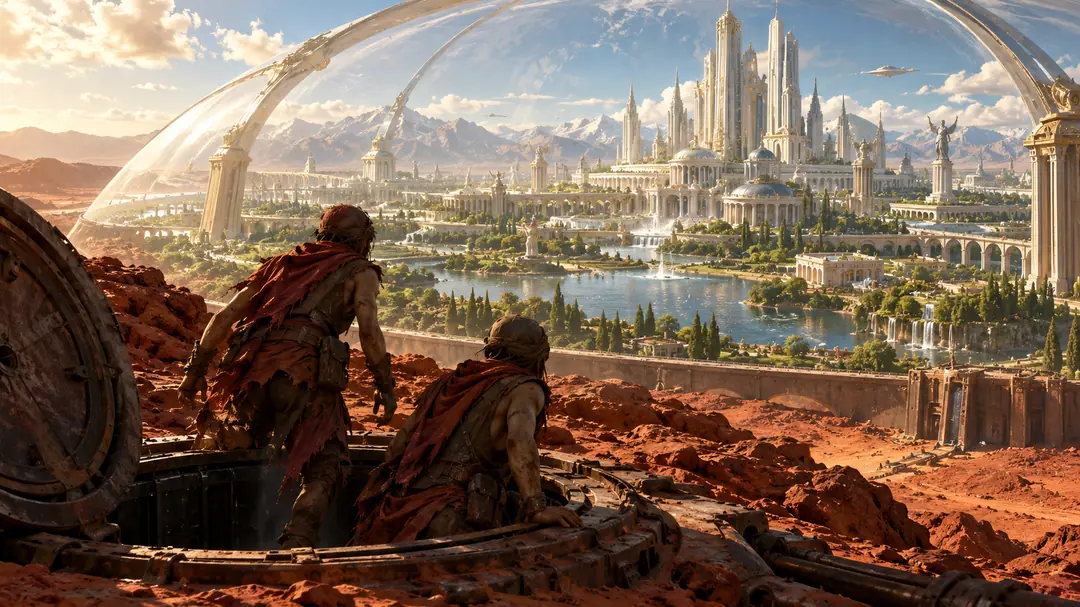
Rescued from the gallows by an underground network called the Sons of Ares, Darrow is taken to the surface for the first time in his life, where he emerges inside a vast dome to find a sprawling metropolis of green parks and gleaming towers. Mars has been terraformed for centuries. The Reds are slave labor kept in the dark. Then he learns a second brutal truth: the lower castes cannot overthrow the Golds from below, because the Golds are genuinely, terrifyingly superior in every metric of war and statecraft. The only way to break the Society is for Darrow to become a Gold himself.
To even enter the arena of historical agency, Darrow must submit to agonizing physical reconstruction and total cultural assimilation. First comes the Carving, a months-long surgical crucible performed by a flamboyant genius Violet bio-sculptor named Mickey. Darrow's brittle Red bones are sawed open and reinforced, his muscles torn and re-woven, his eyes replaced with predatory Gold optics, and his nervous system rewired. His heart gives out on the table. He endures sanity-shredding physical torture just to achieve the baseline biological hardware of the ruling class.
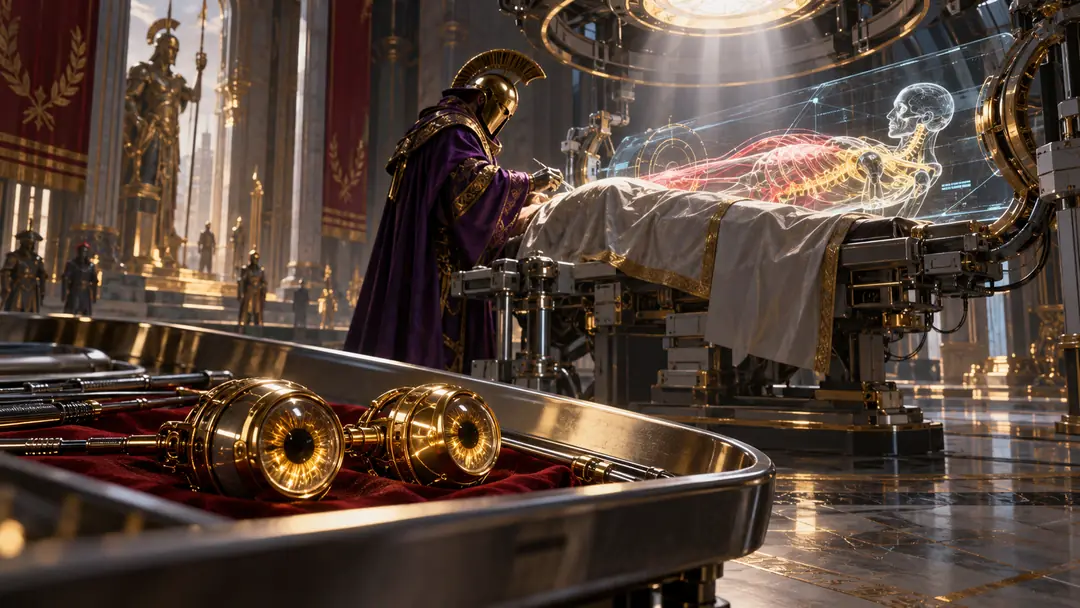
Hardware alone is useless without the software. Enter Matteo, a refined Pink tutor who subjects Darrow to ruthless classical acculturation. Darrow unlearns every slouching posture, emotional outburst, and plebeian dialect of his youth and steeps his mind instead in Greco-Roman history, classical literature, Stoic philosophy, high etiquette, and strategy.
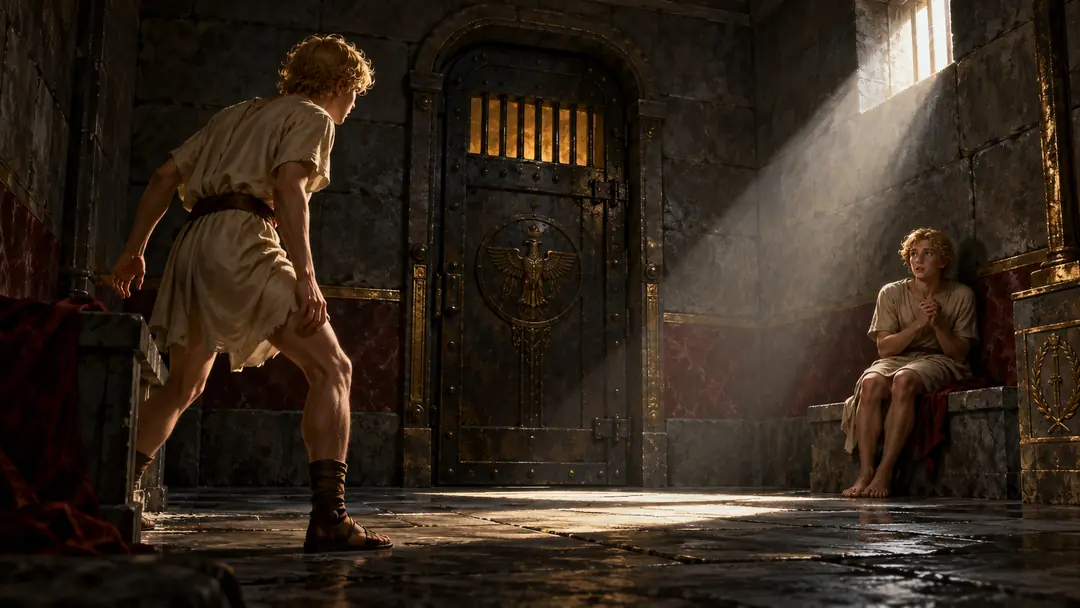
Then he is dropped into the Institute, the boarding school from hell where the children of elite Gold families are forged into rulers. Before classes begin, every recruit is locked in a dark stone room with one other student for the Passage. One walks out alive. Darrow is paired with Julian au Bellona, a sweet, gentle Gold boy who wants no part of violence, and Darrow beats him to death with his bare hands to earn his seat at the table. Through this Darwinian filter the Golds cull half of their own children, ensuring that not even dynastic wealth can save a weak heir. The survivors are released into a vast wilderness divided among twelve castles, given primitive weapons, and told to conquer and enslave one another like feudal warlords. It is the most brutal meritocratic filter ever put on paper, and every founder who has ever hired for a hard job will recognize what it's for.
The training does not stop when the Institute ends. In the years that follow, Darrow apprentices himself to Lorn au Arcos, the greatest living Gold swordsman, and masters the Willow Way, a martial art of supreme fluidity and discipline. He never stops becoming.
To win the Institute and eventually topple the Sovereign, Darrow has to out-Gold the Golds. Along the way, something happens that would give a modern diversity consultant an aneurysm: Darrow falls in love with the highest virtues of Gold culture. He realizes that their obsession with excellence, martial courage, personal honor, and relentless self-overcoming is genuinely magnificent. He stops hating Golds as a race and starts despising them only where they fail to live up to their own Iron Gold ideal.
V. Pareto in space: intra-elite competition and Great Man history
Modern progressives harbor a visceral hatred for the Great Man theory of history. In the academic left-wing imagination, history is an impersonal conveyor belt driven by material forces, deterministic structures, and faceless collectives; individuals are interchangeable corks bobbing on economic waves.
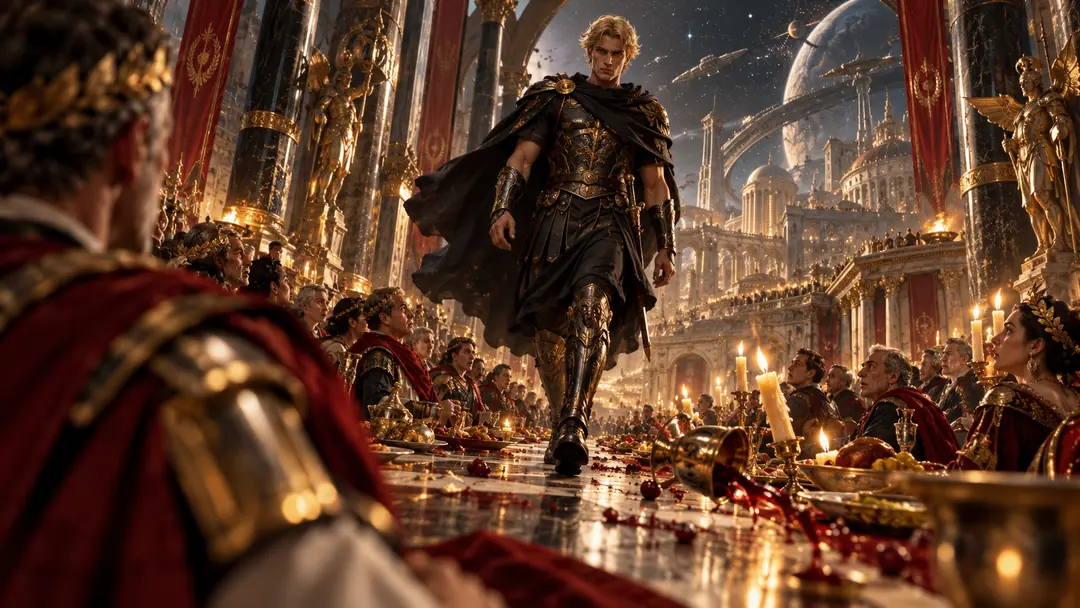
Red Rising is a towering, unapologetic monument to Great Man history. In Brown's universe, entire planetary civilizations rise and fall on the willpower, cognitive horsepower, and charisma of single, irreplaceable individuals. When Darrow decides to start a civil war among the great houses at the Summit on Luna by walking across a dining table and challenging his old rival Cassius au Bellona to a duel, he single-handedly alters the trajectory of billions of lives in five minutes of flashing steel.
And the men and women who alter those trajectories share a character. Darrow and the protagonists around him display the Platonic ideal of classical masculine aristocratic virtue: self-control and emotional mastery under pressure; toughness and grit; courage in the face of insurmountable odds; extreme intensity and violence of action, with swift judgment against the wicked; and a restless curiosity, a drive to learn and grow and become more. Underneath all of it runs a conviction, never quite explicable, that one is fated to alter the course of reality itself, and the ceaseless action that conviction demands. The Greeks had a word for this kind of man: aristos, the best. It is the root of "aristocracy," and it did not mean "privileged."
Even more subversive is how the mechanics of Darrow's rebellion confirm Vilfredo Pareto's theory of the circulation of elites: real political competition is intra-elite conflict, and egalitarian revolution is a myth. History is a graveyard of aristocracies, where a decadent, closed ruling elite (Pareto's foxes, who rule by manipulation and rent-seeking) is overthrown by a vitalized, ruthless counter-elite (his lions, willing to use decisive force), who enlist the masses as a battering ram.
Look closely at who actually carries the water in Darrow's Rising. Does he assemble a multicultural committee of baseline miners and service workers to out-think the Gold fleets? Hardly. His revolution succeeds because he recruits a counter-elite of superior, virtuous aristocrats to purge the decadent rot of the Core.
The intellectual architect, chief strategist, and eventual head of state of the revolution is Virginia au Augustus (Mustang), the daughter of the Gold ArchGovernor of Mars and a certified genetic genius whose cognitive capacity borders on supercomputing. The military vanguard is anchored by the Telemanus family, seven-foot Gold titans who charge into battle quoting classical poetry with a giant genetically engineered fox; Victra au Julii, a fiercely proud aristocratic heiress who endures months of torture without breaking; and Sevro au Barca, a ferocious half-Gold guerrilla prodigy. The money is Quicksilver, a Silver named Regulus ag Sun who is the richest man in the Society, a founding backer of the Sons of Ares, and the man who quietly paid for Darrow's Carving before anyone knew his name. Quicksilver describes himself first and foremost as a capitalist, and he bankrolls the revolution because the Society's rigid structure was strangling technology and commerce. The founders reading this already know this guy.
Even the tiny handful of low Colors who achieve genuine strategic command in the Rising, such as Orion xe Aquarii (a Blue fleet admiral) or Holiday ti Nakamura (a Gray special-forces centurion), are one-in-a-billion outliers who explicitly adopt the martial ethos of the Iron Golds. The lower castes provide the industrial manpower and the infantry bodies. The fate of the solar system is decided by a tiny vanguard of extraordinary aristocrats fighting other aristocrats.
VI. The folly of the Vox Populi: Dark Age as Burkean vindication
If the original trilogy demonstrates how a stagnant oligarchy falls to a vitalized counter-elite, the sequel books (particularly Iron Gold and Dark Age) read like Edmund Burke and Thomas Carlyle co-writing a space opera about the French Revolution. It is here that the right-wing thesis of the series becomes undeniable.
After shattering the Society and killing the old Sovereign, Darrow and Mustang do what every idealistic liberator dreams of doing: they hand sovereign power to a democratic Solar Republic. Mustang establishes a Senate with ten seats for every Color, attempting a delicate balance between the irreplaceable military competence and vast wealth of their allied Gold families and the egalitarian demands of the newly liberated lowColors.
The entire experiment collapses into a dumpster fire of resentment, corruption, and suicidal myopia inside a single decade. Stripped of centuries of institutional order and guided by the delusion that biological and strategic realities can be voted away, the lowColor masses revert to the exact pathologies conservative philosophers have warned about since ancient Athens.
Out on the fringes of Mars, a militant lowColor faction called the Red Hand degenerates into genocidal terror. Claiming to fight for the oppressed working class, the Red Hand spends most of its energy slaughtering Gamma Reds, a slightly favored sub-group of miners, out of pure envy; the massacre of one Gamma family is where a whole book's plot begins.
Meanwhile, in the gleaming capital on Luna, egalitarian politics produces the Vox Populi, a populist coalition led by a demagogic Copper bureaucrat named Publius cu Caraval and Darrow's own former mentor, Dancer. While the surviving Iron Gold warlords of the old Society, led by the ruthless Atalantia au Grimmus, mass an armada to reconquer the planets and put every lowColor back in chains, what does the democratic Senate do? It obsesses over wealth redistribution, whines about Gold privilege in the officer corps, entertains a transparently fake peace offer from the totalitarian remnant, and refuses to grant its own Sovereign command of the fleet.
Democracy fails here the exact same way it always does: a democratic assembly is the cheapest possible instrument for ambitious elites to capture, the masses are easily led by the noses in memetic propaganda warfare, and intra-elite competition will always use it.
The masses do not drive events. They are driven, by whoever is best at telling them what they want to hear. Every mechanism of elite corruption that destroys the Republic in these books is possible only because there is a democracy to corrupt.
When Darrow ignores the paralysis of the Senate to launch an unauthorized strike that liberates Mercury, the Vox react with self-destructive insanity. Rather than reinforcing him to finish off the enemy fleet, the assembly strips him of command, cuts his supply lines, and sends armed Wardens to arrest its own greatest general in the middle of an interplanetary war. Left stranded on Mercury while Atalantia's legions rain fire down from orbit, Darrow unleashes the Storm Gods, colossal terraforming engines that turn the planet's weather into a weapon, just to keep his abandoned army alive. Millions die in the storms. It is a monstrous act and a necessary one, and what matters is what Darrow does with it afterward: he carries it. He does not explain it away. He owns it, and he answers for it, as a man should.
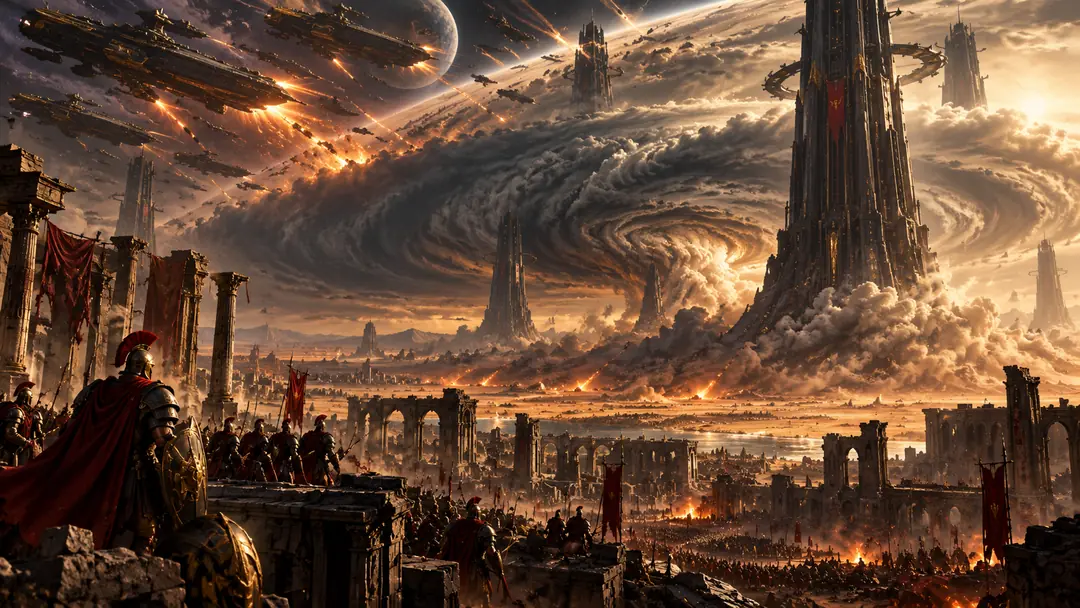
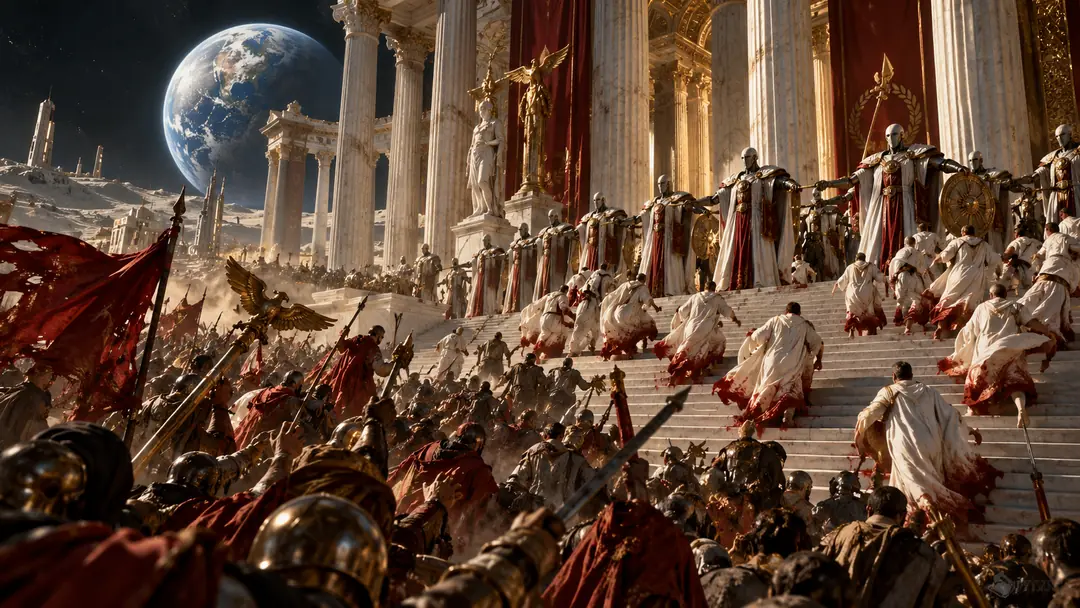
Back on Luna, the egalitarian delusion reaches its logical conclusion on the Day of Red Doves. Mustang has finally forced a vote to send the home fleet to rescue Darrow's stranded legions. In the middle of the debate, the moderate Vox senators, Dancer among them, collapse and die on the floor: poison, woven into their togas. Publius accuses Mustang of assassinating her enemies and whips the surviving Vox into a frenzy. The Wardens guarding the Forum have already been bought. The shields come down, and the mob comes in.
What follows is a bloodbath straight out of the Jacobin Terror. Senators are beaten to death trying to flee or to reason with the crowd. The ten Obsidian senators form a line to shield the weaker members, and every one of them dies holding it. Daxo au Telemanus, a brilliant Gold who had retired from command to spend a decade building and defending the Republic in its Senate, holds the mob back so Mustang can escape. She is beaten down anyway, and when she comes to, she watches Daxo pinned by a Syndicate enforcer while a woman cuts off his head and flicks it to the crowd. The woman is Lilath au Faran, the dead Jackal's old lieutenant, now Queen of the criminal Syndicate. Mustang is dragged off by the citizens she spent ten years liberating. Publius dissolves the Senate, replaces it with a People's Tribunal, and starts the show trials.
And of course, the entire populist movement was financed and steered from behind the curtain by Lilath, the Syndicate, and a cloned copy of the Jackal, using lowColor envy as a wrecking ball to destroy the Republic from within. A bought mob is a weapon, democratic systems build and empower the weapon, and it is dangerous in a way nothing else is, because it cannot be reasoned with, cannot be held accountable, and does not know whose hand is on the hilt. The only reason a gangster and a clone could seize the most powerful polity in the solar system in an afternoon is that the Republic had built them the mechanism to do it with.
Within hours of overthrowing their aristocratic protectors, the triumphant egalitarian mob discovers it has no idea how to run a planetary defense grid, command a starfleet, or feed a moon. The rescue fleet never sails. Of the four million men Darrow took to Mercury, fewer than three thousand get off the planet.
When the dust settles and the democratic fantasy lies in smoking ruins, the survival of humanity falls once again onto the shoulders of Darrow, Mustang, Victra, Sevro, Diomedes of the Rim, and the tiny vanguard of extraordinary aristocrats capable of wielding extreme, disciplined violence against enemies that cannot be reasoned with.
VII. Lysander and Darrow: the right way and the wrong way to be above people
The villain of the second trilogy is not a lowColor demagogue. It is Lysander au Lune, and Lysander is an Iron Gold.
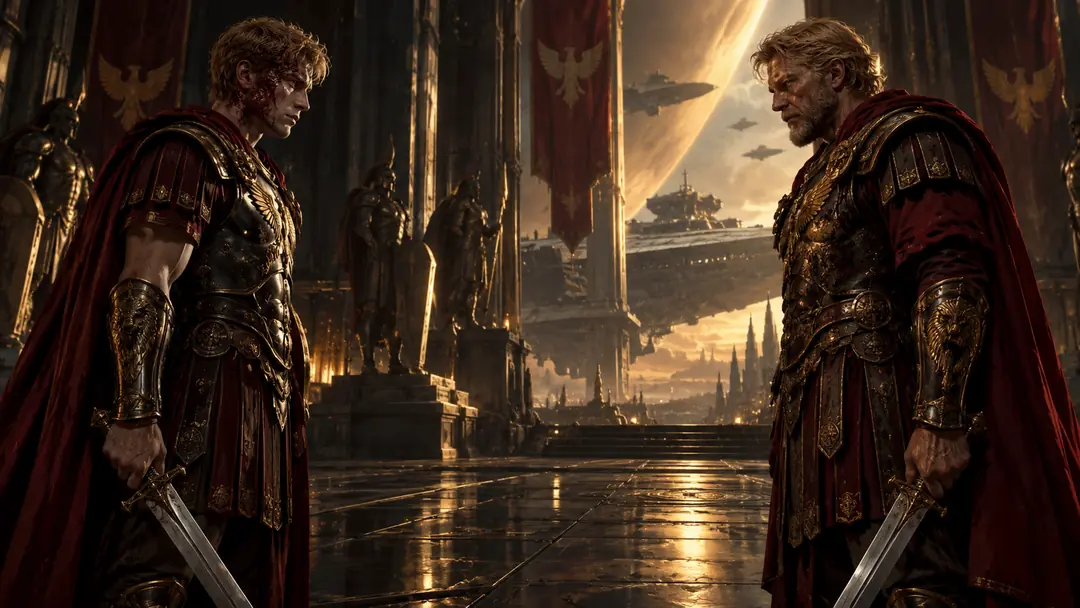
He is the grandson of the old Sovereign, raised in the Citadel on Luna, taught the Mind's Eye (a discipline of perfect perception and perfect self-control) by Octavia herself, taught never to lie. After the Rising he spends ten years in exile as the ward of Cassius au Bellona, the paragon of Gold chivalry, who tries with everything he has to make the boy a good man and not merely a great one. Lysander sympathizes with the lowColors. He is brave. He is brilliant. He genuinely believes that the order Gold brings is better than the chaos that followed its fall, and he is not entirely wrong. He is, on paper, everything Darrow had to become.
And he is a sociopath. Not a cartoon; a precise one. When Romulus dies on the ice, Lysander declares himself an Iron Gold and goes home to the Society remnant to reclaim his birthright. He falls in the Rain over Mercury to earn his scar. During the Long Night he turns the Free Legions' escape plan into a trap and delivers four million men to death or chains. He marries Atalantia. And in Light Bringer, he uses Cassius, the man who raised him, to assassinate a rival, then shoots Cassius dead in a hangar when Cassius refuses to walk away from what he has seen, frames his surrogate father as Darrow's assassin, and uses the frame as a pretext to destroy Io's food supply. "No more peacemaker," he tells himself. "No more politician. No more feeble seed. I am Iron. I am Death. I am Gold."
Lysander is what the Iron Gold code looks like when you strip out the noblesse oblige. He kept the excellence and discarded the duty. He kept the hierarchy and discarded the obligation that runs down it. Lorn au Arcos, the old swordmaster, was Lysander's grandfather and Darrow's teacher, and only one of them learned anything from him. Lysander mistook the right to rule for the whole of the thing, when the right to rule was only ever the consequence of carrying the weight of duty ruling justly entails.
Darrow, by contrast, is the Gold ideal fully realized. Darrow stands as far above the Reds of Lykos as any Gold ever did: carved, trained, hardened, the greatest killer alive. He never once pretends otherwise, and he never once pretends that the Reds are his equals in the arena. What he does instead is bear responsibility for them. He frees the Obsidians and then weeps for the ones who die under his command. He breaks Mercury's weather to save his men and then carries the dead of Mercury into every room he enters for the rest of the story. He accepts judgment for what he has done. The whole second trilogy is the education of a man who has learned that greatness confers obligation, not license, and that the moment you forget who you owe is the moment you become Lysander.
Same training, two men
Lysander and Darrow set side by side in the essay's own sentences. Both learned from Lorn au Arcos. Lysander kept the excellence and discarded the duty; Darrow learned that greatness confers obligation, not license. At Mercury, Lysander earns his scar in the Rain while Darrow breaks the weather to save his men and carries the dead after. Lysander delivers four million men to death or chains; Darrow weeps for the Obsidians who die under his command. Lysander frames his surrogate father; Darrow accepts judgment. Lysander becomes 'I am Iron. I am Death. I am Gold.'; Darrow, the Gold ideal fully realized.
The teacher
“Lorn au Arcos, the old swordmaster, was Lysander's grandfather and Darrow's teacher, and only one of them learned anything from him.”
- What he kept
- Lysander“He kept the excellence and discarded the duty.”
- Darrow“…greatness confers obligation, not license”
- At Mercury
- Lysander“He falls in the Rain over Mercury to earn his scar.”
- Darrow“He breaks Mercury's weather to save his men and then carries the dead of Mercury into every room he enters for the rest of the story.”
- The men below him
- Lysander“…he turns the Free Legions' escape plan into a trap and delivers four million men to death or chains.”
- Darrow“He frees the Obsidians and then weeps for the ones who die under his command.”
- Judgment
- Lysander“…frames his surrogate father as Darrow's assassin”
- Darrow“He accepts judgment for what he has done.”
- What he became
- Lysander“I am Iron. I am Death. I am Gold.”
- Darrow“…the Gold ideal fully realized”
This is the oldest conservative idea there is: noblesse oblige. The duty owed downward by those above. Every human being has inherent dignity and every human life is valuable, and that truth does not imply, and never has implied, that human beings are equal in capacity, in virtue, or in what they can be trusted to decide. Aquinas knew it. Burke knew it. Lorn au Arcos knew it. Brown knows it too, whatever he says at dinner parties, because he wrote the hero who lives by it and the villain who doesn't, and gave them the same training.
Notice, too, what Brown does with every other way of organizing human beings. He runs them all. The Core is empire, and it rots from the inside once the frontier closes. The Rim is feudalism, and it keeps the code and loses the state. The Republic is democracy, and it is bought in a decade. Sefi's Obsidians try exit, walking away from the war to build their own nation on Mars, and they are devoured by a worse predator from the dark. Quicksilver's capital finances the right side and cannot rule anything. Every institution fails in exactly the way the history books say it should. The only thing that holds, in every regime, under every pressure, is a handful of extraordinary people who have the clarity of vision to chart a golden path onward, and the sheer audacity to take action and see it through.
He runs them all
Five ways of organizing human beings that the series puts to the test, each struck through. The Core is empire and rots once the frontier closes. The Rim is feudalism and keeps the code but loses the state. The Republic is democracy and is bought in a decade. Sefi's Obsidians try exit and are devoured by a worse predator. Quicksilver's capital finances the right side and cannot rule anything. What holds is a handful of extraordinary people.
Read it in section II“In a word, the Core died of decadence.”
Read it in section III“Feudalism keeps the code alive at the cost of every failure mode it has ever had: the blood feud that outlives its cause, the palace coup by the patriarch's own wife, the duel spent as a political instrument”
“…a democratic assembly is the cheapest possible instrument for ambitious elites to capture”
Read it in section VI“The only reason a gangster and a clone could seize the most powerful polity in the solar system in an afternoon is that the Republic had built them the mechanism to do it with.”
- Sefi's ObsidiansExitSefi's Obsidians try exit, walking away from the war to build their own nation on Mars, and they are devoured by a worse predator from the dark.
Read it in section V“Quicksilver describes himself first and foremost as a capitalist, and he bankrolls the revolution because the Society's rigid structure was strangling technology and commerce.”
- What holdsa handful of extraordinary people
VIII. The Iron Gold mandate
Pierce Brown may well consider himself a modern liberal in polite Hollywood company (or not, I have no clue, I'm pretending he is 'cause it makes this essay better). His artistic honesty forced him to write the ultimate right-wing epic anyway. Every page of Red Rising insists on truths that modern Western culture spends billions of dollars trying to suppress: that biological and cognitive differences are real; that grievance without self-mastery is pathetic; that civilization is built and defended by a tiny fraction of extraordinary men and women driven by honor, duty, and ambition; that those men and women owe something to everyone beneath them, and are only worth following when they pay it; and that when a society tears down its best in the name of egalitarian resentment, it does not get equality. It clears the way for actual monsters to rule the ashes.
We live in a culture drowning in Pixies and governed by the Vox Populi. No wonder young men by the millions are devouring a story about what it takes to become an Iron Gold.
Notes
- 1.
lowColors
On the wiki's ladder Obsidian is one of the four lowColors, with Brown, Pink and Red: the castes with the fewest rights, many of them legally property.
- 2.
Iron Gold
The wiki has the same count: 71 steps toward the Dragon Tomb, a fall he could not rise from with one arm, and death ten steps from the monument. He lost the right arm in battle and chose never to replace it.
- 3.
Red Rising
He is hanged and lives: his uncle Narol had drugged him so he would seem to die, then did not pull his legs hard enough.
- 4.
Golden Son
After the Institute, in August 738, Darrow sought Lorn out at his estate and talked him into teaching the Willow Way. Lorn's page calls Darrow his final student.
- 5.
Regulus ag Sun
He financed the Sons of Ares and their program to carve a Red into a Gold, which succeeded in 737 with Darrow and with a second Red, Arlus of Thebos.
- 6.
Iron Gold
At Assimilation Camp 121 the Red Hand killed several Gamma Reds, among them the family of Lyria of Lagalos, one of Iron Gold's narrators.
- 7.
Dark Age
The poison took hold while Dancer was in the middle of a speech.
- 8.
Dark Age
All ten Obsidian senators are on the wiki's list of the day's dead.
- 9.
Dark Age
Daxo fought the mob with the Dawn Scepter. The Syndicate enforcer holding him down was Gorgo; the wiki names the Syndicate Queen as Lilath au Faran in the next breath.
- 10.
Dark Age
The wiki's count: all but 2,211 of the four million troops on Mercury were captured or killed.
- 11.
Light Bringer
Hangar 17B of the Lightbringer, where the two of them had just ambushed Atlas au Raa. Lysander then framed Cassius as an assassin sent by Darrow.
- 12.
Light Bringer
The wiki places the line in chapter 22, where it opens: “Noble thoughts flee.”
- 13.
Lorn's line
Lorn's last son, Brutus au Arcos, was Lysander's father. Brutus died in a shuttle explosion with his wife Anastasia, Octavia's daughter.
Red Rising Wiki, “Lorn au Arcos”Red Rising Wiki, “Lysander au Lune”
- 14.
Dark Age
The predator is Volsung Fá. On the wiki he kills Sefi in a duel, takes her throne, turns his Volk loose on her city of Olympia, and leaves with her army and fleet.
Continue exploring
Follow the thread from here.
Move into the wider archive, browse connected topics, or jump over to the projects turning these ideas into something concrete.